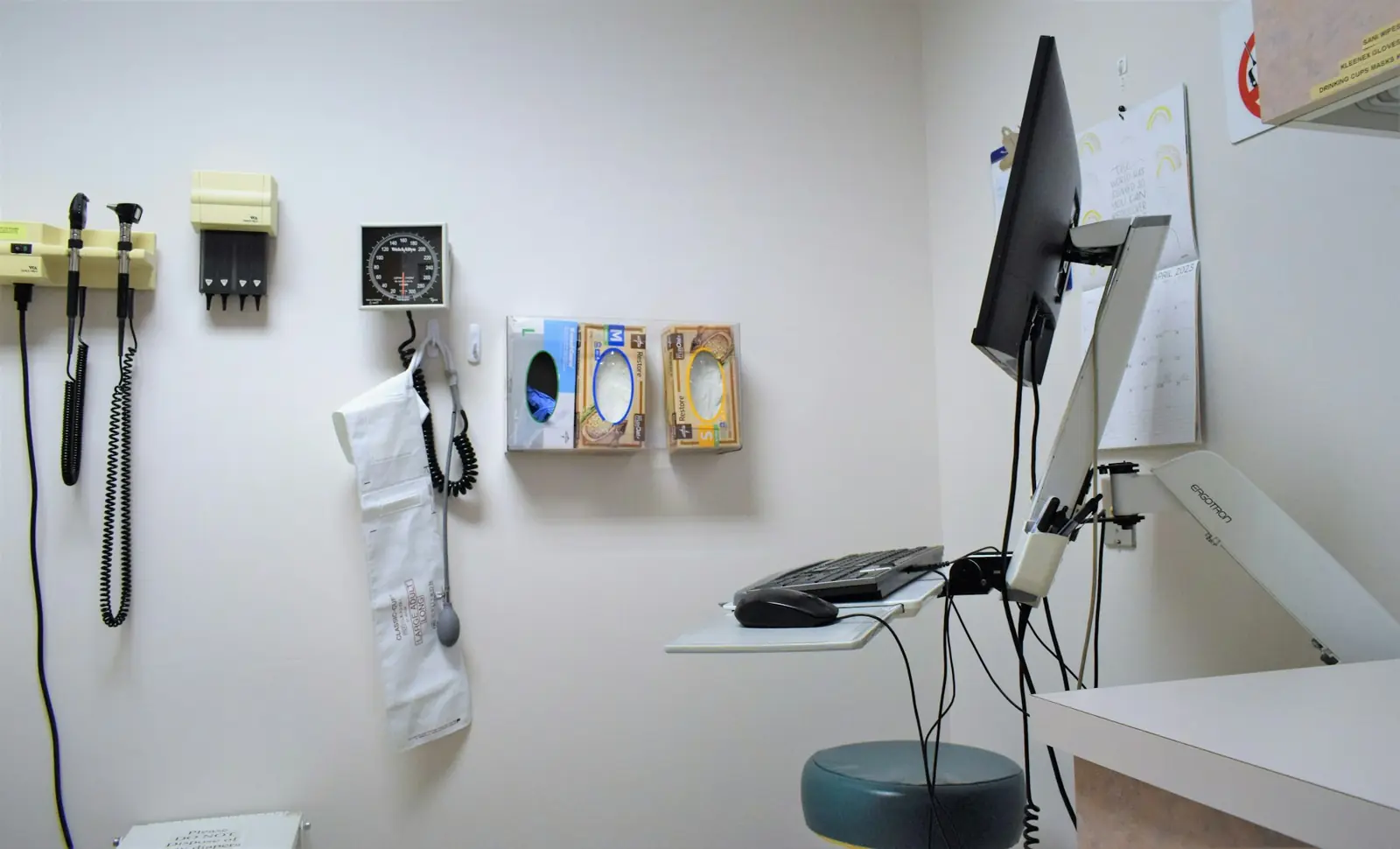
Joint injections for adults near Trinity and Hudson, FL
Office injections and joint aspiration for knee, shoulder, hand, hip, and muscle pain, offered after an exam shows an injection is likely to help.

Joint injections place medication, most often a corticosteroid, directly into a painful joint, bursa, tendon sheath, or tight muscle to calm inflammation and ease pain. Our practice offers knee, shoulder, elbow, wrist, hand, ankle, and plantar fascia injections, trigger finger and carpal tunnel injections, trigger point injections, and joint or bursa aspiration for adults 18 and older. Every injection starts with an evaluation, and not every patient or joint is a candidate. Availability can vary by procedure, provider and scheduling. Contact the office to confirm the appropriate location for your appointment.
- Visit type
- Office procedure after an exam
- Numbing
- Often mixed into the injection
- Who gives it
- Our internal medicine team
- Afterward
- Usually light activity afterward
- Repeat injections
- Limited and spaced out
Ready to schedule? New patients age 18 and older are welcome.
Joint injections are office procedures that deliver medication right where pain and inflammation start, inside a joint or in the soft tissue around it. Adults 18 and older can be evaluated for knee, shoulder, hand, hip area, foot, and trigger point injections by our internal medicine team. Your provider examines the area, reviews your history and any imaging, and explains whether an injection is likely to help before anything is done. Availability can vary by procedure, provider and scheduling. Contact the office to confirm the appropriate location for your appointment.
Injections our practice offers
Knee injections
- Knee corticosteroid (cortisone) injection for flares of knee osteoarthritis and inflammation
- Knee viscosupplementation, a series of hyaluronic acid injections that some people with knee osteoarthritis use when other treatments have not helped enough
- Knee aspiration to remove extra fluid from a swollen knee, which can relieve pressure and let the fluid be tested
Shoulder injections
- Glenohumeral (shoulder joint) injection for shoulder arthritis and some cases of frozen shoulder
- Subacromial bursa injection for bursitis and rotator cuff irritation that hurts when you lift your arm
- Acromioclavicular (AC) joint injection for pain on the top of the shoulder
Elbow, wrist, and hand injections
- Elbow joint injection and olecranon bursa aspiration for a swollen bump at the tip of the elbow
- Wrist joint injection and first carpometacarpal (thumb base) injection for arthritis that makes gripping and pinching hard
- Finger joint injection for painful arthritis in a finger
- Trigger finger injection for a finger that catches, locks, or snaps when you bend it
- Tendon sheath injection for inflamed tendons, such as at the base of the thumb
- Carpal tunnel corticosteroid injection for numbness and tingling in the hand from a pinched nerve at the wrist
- Ganglion cyst aspiration to drain a fluid filled lump on the wrist or hand
Hip, ankle, and foot injections
- Greater trochanteric bursa injection for pain on the outside of the hip that is worse when lying on that side
- Ankle joint injection for ankle arthritis
- Plantar fascia injection for heel pain that has not improved with stretching, footwear, and other care
Trigger point injections
Trigger points are tight, tender knots in a muscle that can cause local pain and pain that spreads to nearby areas, often in the neck, upper back, and shoulders. A trigger point injection places a small amount of numbing medicine, sometimes with a corticosteroid, directly into the knot to help the muscle relax. Many people combine these injections with stretching, posture changes, and physical therapy.
Have questions about your care? New patients age 18 and older are welcome.
Joint and bursa aspiration
Aspiration (arthrocentesis) uses a needle to draw fluid out of a swollen joint or bursa. Removing fluid can ease pressure and pain, and testing the fluid can help show whether swelling is from arthritis, gout, or infection. In selected cases, a provider may also drain a collection of blood under the skin (a hematoma). An injection may be given during the same visit when it is appropriate.
What to expect at your visit
Before the injection. Your provider examines the joint or muscle and may order X rays or other imaging. Tell the team about blood thinners, diabetes, allergies, and any recent infection. If you have diabetes, bring your recent glucose readings.
During the injection. The skin is cleaned with an antiseptic. A thin needle places the medication in the right spot, and many injections include a numbing medicine. Most people feel brief pressure or a pinch. The visit is usually short.
After the injection. Rest the area for a day or two as instructed, then return to normal activity. Some people feel relief within days, and corticosteroid relief often builds over one to two weeks. A short flare of soreness can happen. People with diabetes should check blood sugar more often for a few days.
When a specialist or imaging guidance is better
Some injections are best done with ultrasound or X ray guidance, and some joints are better treated by orthopedics, sports medicine, rheumatology, or pain management. Your provider will refer you when a joint has not responded to injections, when surgery may be the better option, or when an injection needs imaging guidance that is not part of a routine office visit.
Care from your primary care team
Joint pain rarely happens in isolation. Weight, blood sugar, bone health, and medications all affect your joints, and our team can connect injection care with medical weight management, diabetes care, bone health, and your overall primary care. Care is overseen by our internal medicine team, led by Dr. John Hanna, MD, who is board certified by the American Board of Internal Medicine. Our team serves adults at the Trinity and Hudson offices.
New patients age 18 and older are welcome. Appointment availability is determined by the office. Joint injections are one of our office procedures and in office services.
Insurance and coverage
Coverage depends on your plan. Contact the office to verify participation. Some plans have their own rules for viscosupplementation, so ask about it when you call.
Seek urgent care for a hot, red, swollen joint with fever, severe pain after an injury, inability to bear weight, or sudden weakness or numbness. These can be signs of infection, a fracture, or another problem that needs prompt care.
Frequently asked questions
Can a primary care provider give a knee or shoulder injection?
Yes. Many knee and shoulder injections can be given in a primary care office after an exam. Your provider will let you know if a specialist or an image guided injection is the better fit.
How long does a cortisone injection last?
Relief varies from person to person. Some people feel better for weeks to months, while others notice less benefit. Your provider explains how often injections can safely be repeated in the same area.
What are trigger point injections?
They place a small amount of numbing medicine, sometimes with a corticosteroid, into a tight, tender muscle knot to help it relax. They are often used with stretching and physical therapy.
Do joint injections hurt?
Most people feel brief pressure or a pinch. Some soreness at the site for a day or two is common.
Which office offers joint injections?
Joint injections are offered across our Trinity and Hudson offices. Availability can vary by procedure, provider and scheduling. Contact the Trinity office at (727) 997-1635 or the Hudson office at (727) 605-3000 to confirm the appropriate location for your appointment.
This content is provided for general educational information and is not a substitute for personalized medical advice, diagnosis, or treatment. Medical needs and treatment options vary from person to person. If you have questions about your health or whether a service may be appropriate for you, contact Internal Medicine MD to speak with a member of the care team or schedule an appointment with a qualified medical provider. If you are experiencing a medical emergency, call 911 or seek emergency medical care.
Related care