
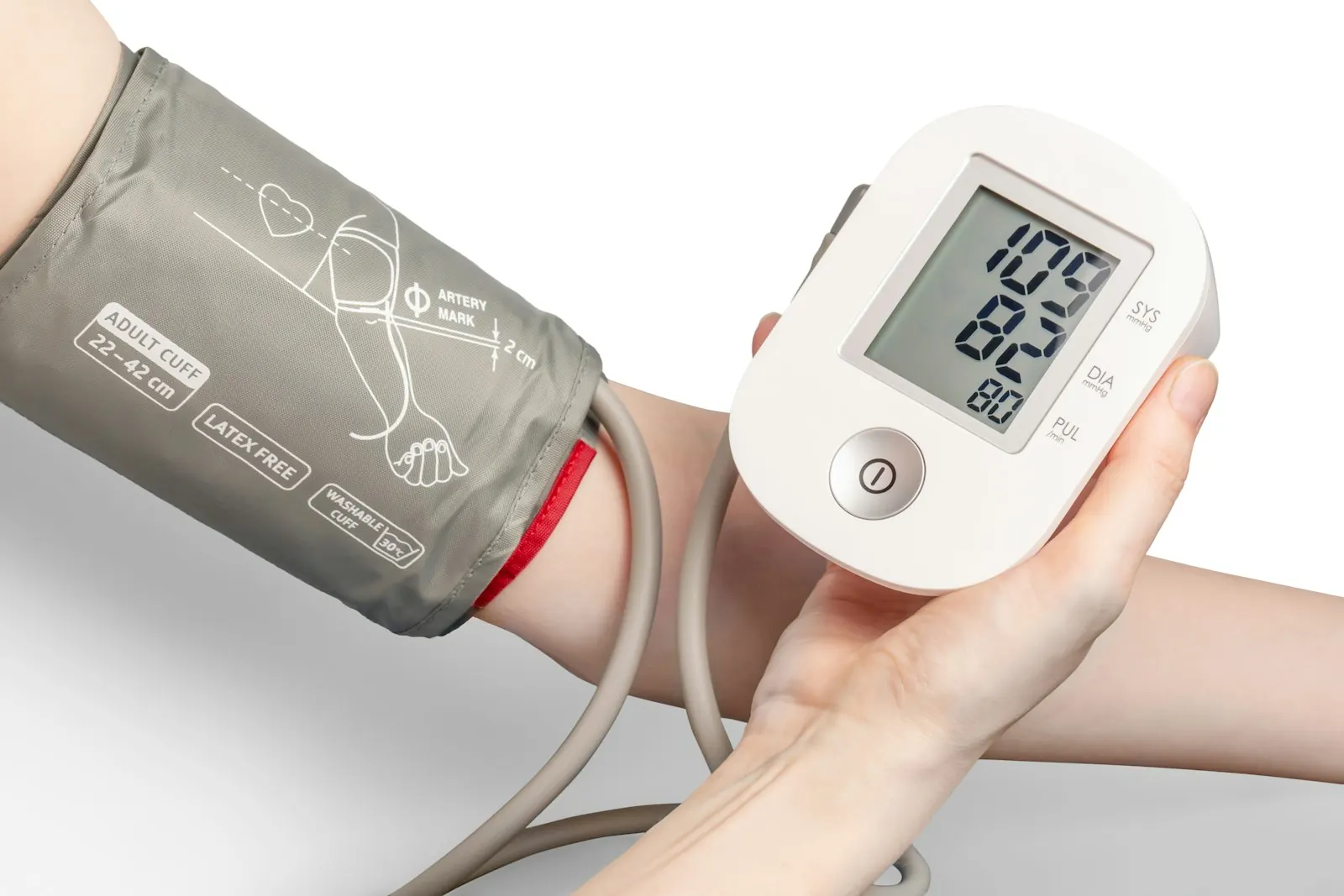
Home blood pressure readings give your provider a clearer picture of your numbers in everyday life, not just during a few minutes at the office. Use a validated upper arm monitor, measure the same way each time, and bring a simple log of your readings to your visit.
Your blood pressure changes throughout the day, so a single reading at the doctor's office tells only part of the story. Readings you take at home, written down in a simple log, help your primary care provider see how your numbers look in everyday life. This guide explains how to choose a monitor, take accurate readings, and bring useful information to your next visit in Trinity.
Why can home blood pressure readings be useful?
Home readings add context that an office visit cannot. They show patterns across different days and times, which helps your provider make decisions based on more than one moment.
The National Heart, Lung, and Blood Institute notes that some people have higher readings at the office than at home, sometimes called white coat hypertension, while others read lower at the office than they do in daily life, called masked high blood pressure. Your provider can recognize these patterns by comparing office readings with readings from home.
The U.S. Preventive Services Task Force also recommends blood pressure measurements taken outside the clinical setting to confirm a diagnosis of high blood pressure before treatment begins. Home monitoring is one of the methods it describes.
What type of monitor should I use?
The American Heart Association recommends an automatic, cuff style monitor that goes on your upper arm. A few points to look for:
- Choose a validated device. The American Medical Association supports ValidateBP.org (opens in a new tab), a free listing of blood pressure devices that have been reviewed for clinical accuracy by an independent committee.
- Get the right cuff size. A cuff that is too small or too large can affect the reading. Measure around your upper arm and compare it with the cuff sizes listed for the monitor.
- Bring it to your provider. The AHA suggests bringing your monitor to an appointment so your care team can check your technique and compare its readings with office equipment.
The AHA does not recommend wrist or finger monitors for home use. If an upper arm cuff is hard for you to use, ask your provider which option fits your situation.
How should I take a home blood pressure reading?
Using the same steps every time makes your readings easier to compare. These steps follow guidance from the AHA and the CDC:
- Prepare for 30 minutes. Avoid smoking, caffeinated drinks, and exercise for 30 minutes before measuring.
- Empty your bladder before you sit down.
- Rest quietly for at least five minutes, without talking or looking at your phone.
- Sit with good posture. Use a chair that supports your back, keep both feet flat on the floor, and keep your legs uncrossed.
- Support your arm at heart level on a table or flat surface, using a pillow if needed.
- Place the cuff on bare skin. The bottom of the cuff should sit just above the bend of your elbow.
- Stay still and quiet while the monitor takes the reading.
- Take two readings one minute apart and write both down.
Try to measure at the same times each day. Your provider can tell you how often to measure and for how many days.
What information should I write down?
A useful log is simple and consistent. For each reading, write down:
- The date and time
- Both numbers. The top number is systolic pressure and the bottom number is diastolic pressure.
- Your pulse, if your monitor shows it
- Which arm you used
- Brief notes, such as whether you had just woken up, were feeling unwell, or had taken your usual medications that day
Many monitors also store readings in memory. Writing them down still helps, because your notes add context that the monitor cannot record.
How can I use a simple 7 day log?
A seven day log gives your provider a week of readings to review, unless your provider recommends a different schedule. A common approach is to measure in the morning and again in the evening, taking two readings one minute apart each time.
Download the printable 7 day log (PDF)
The printable log is a blank sheet you fill in by hand. It does not ask for your name or any other personal details, and nothing you write on it is sent to our website. Here is how the log is laid out:
| Day | Morning readings | Evening readings | Notes |
|---|---|---|---|
| Day 1 | / and / | / and / | |
| Day 2 | / and / | / and / | |
| Day 3 | / and / | / and / |
The full sheet continues through Day 7, with separate spaces for each reading plus the date, time, and pulse.
When should I call my provider or seek emergency care?
A single high reading is not usually a reason for alarm. The American Heart Association recommends waiting, retesting, and recording both readings, then checking with your provider about what your readings mean for you.
In summary, the AHA's guidance for very high readings is:
If your blood pressure is higher than 180/120, wait at least one minute and test again. If it is still that high, contact your health care professional right away. If a reading above 180/120 comes with symptoms such as chest pain, shortness of breath, back pain, numbness, weakness, a change in vision, or difficulty speaking, call 911.
Your provider can also tell you which readings they want to hear about between visits. Please keep taking your medications as prescribed and talk with your provider before making any changes.
What should I bring to my Trinity appointment?
To make the most of a visit about your blood pressure, bring:
- Your completed log, or the readings saved on your monitor
- Your monitor and cuff, so your care team can check the fit and your technique
- A list of every medication and supplement you take, with doses
- Your questions, written down so nothing gets missed
Our care team can review your readings as part of high blood pressure care and talk through next steps with you. If you are managing more than one condition, our article on coordinated care for chronic conditions explains how one team keeps the whole picture organized.
The Trinity office is at 3633 Little Rd, Ste. 103, Trinity, FL 34655. New patients age 18 and older are welcome. Appointment availability is determined by the office. Call (727) 997-1635 or request an appointment online.
Frequently asked questions
How many readings should I take?
The American Heart Association recommends taking two readings one minute apart each time you measure, at the same time each day. Your provider can tell you how many times a day and for how many days to measure.
Should I bring my blood pressure monitor to the appointment?
Yes. The American Heart Association suggests bringing your monitor to your provider so your care team can check your technique and compare its readings with office equipment.
Are wrist monitors accurate?
The American Heart Association recommends an automatic upper arm monitor and does not recommend wrist or finger monitors for home use. If an upper arm cuff is hard for you to use, ask your provider which option fits your situation.
Sources
- American Heart Association, Monitoring your blood pressure at home (opens in a new tab)
- CDC, Measuring your blood pressure (opens in a new tab)
- NHLBI, High blood pressure diagnosis (opens in a new tab)
- U.S. Preventive Services Task Force, Hypertension in adults: screening (opens in a new tab)
- American Medical Association, ValidateBP validated device listing (opens in a new tab)
This article is general health information from the Internal Medicine MD care team and is not a substitute for advice from your own provider.
 Hypertension Control
 Heart Disease Management
 Chronic Disease Management